A CBD brand can look reassuring before you have learned much about the contents of its bottles. Product names, laboratory references, and enthusiastic customer comments all contribute to that impression. The harder questions concern the evidence behind the label: whether a report identifies the actual batch, whether the intended use is clear, and whether the claims go further than the research supports.
This Mama Kana review examines those questions across its CBD oils, flowers, and resin products. Searches for the brand often combine two different concerns: whether the business operates as a recognizable retailer, and whether its products deliver the health effects described online. Those questions require different evidence, and a positive answer to the first cannot settle the second.
The assessment draws on publicly available brand information, customer-review pages, and public-health sources checked on October 19, 2026. It includes no firsthand use, unboxing, laboratory testing, or treatment recommendation. The purpose is an independent consumer-information review, with particular attention to labeling, transparency, and the limits of what an online review can establish.
Mama Kana at a Glance
Assessment: A visible CBD retailer whose individual products still require batch-specific verification. Useful information: Product descriptions, public feedback, and published sales terms. Main concerns: Strong wellness claims, unclear distinctions between promotional language and intended use, and laboratory claims that should be checked against the exact product. Rating: No numerical score; product quality and effectiveness were not independently tested.
Understand the Evidence Before the Claims
Public-health guidance provides a useful starting point for understanding the difference between commercial CBD products and approved medicines.
Read the Cannabinoid Evidence OverviewWhat Is Mama Kana?
Mama Kana is a French-facing CBD retailer with a catalog spanning oils, flowers, resins, and other hemp-related formats. Its website presents a family-oriented identity and provides shopping information in French. The range is broader than a single oil formulation, so a brand-level assessment cannot establish the composition or suitability of every item. The official site is the source for these descriptions; they are not an independent manufacturing audit.
The homepage identifies flower suppliers in France, Switzerland, and Italy and describes a French-origin resin range. That distinction matters when reading general statements about French production. A retailer can source different categories from different places, and a brand identity does not establish one origin for everything it sells. Traceability should follow the particular product and batch rather than the nationality suggested by the storefront.
Its website also uses promotions and loyalty messages prominently. Those features explain part of its commercial appeal, but they are separate from quality evidence. A product range can be extensive and an offer can be attractive while questions about composition, intended use, or documentation remain unresolved. Keeping those issues separate is essential to a fair Mama Kana CBD review.
Mama Kana CBD Oil Review: Reading the Label Closely
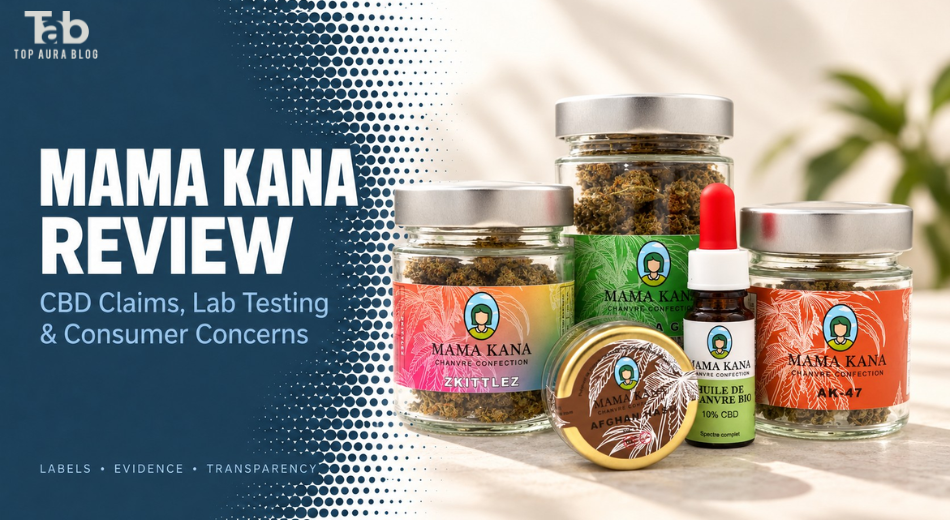
The 20% oil listing describes a full-spectrum formulation, identifies hemp-related ingredients and terpenes, and states 2,000mg of CBD for its 10ml format. It names an independent laboratory, LEAF, in its testing claims. Those are seller statements, not measurements verified for this article. The same page contains both wellness language and a notice that the product is not intended for food use.
Someone searching for a Mama Kana 20 CBD oil review is likely asking whether the concentration makes it more effective. Concentration alone cannot answer that. A percentage describes an aspect of composition; it does not establish clinical benefit, appropriate use, or safety for a particular person. Even an accurate label would leave those questions open.
The food-use notice deserves clarification before anyone interprets the listing as an oral-use recommendation. When the intended-use statement and surrounding copy appear difficult to reconcile, the responsible response is to obtain a clear written explanation. This review does not resolve that inconsistency by supplying its own administration instructions.
Mama Kana CBD Flowers Review: What Can Be Evaluated Online?
Flower listings invite attention to appearance, cultivation descriptions, aroma, and named varieties. Photographs can communicate how the seller presents a product, but they cannot establish the condition of an individual delivery. An online image does not reveal moisture, storage history, microbial contamination, or an accurate cannabinoid profile. Those limitations remain even when the photography looks detailed.
For documentary assessment, the useful questions are whether the label identifies the batch and whether supporting analysis can be matched to it. An undated certificate for a similarly named flower is weaker evidence than a report clearly identifying the tested sample. Names and visual characteristics should not be treated as laboratory identifiers.
This is therefore a review of disclosure rather than a sensory assessment. There are no claims here about how the flowers smell, taste, or feel in use. Other writers may offer personal impressions, but those impressions still cannot establish chemical composition. Readers comparing Mama Kana CBD flowers reviews should distinguish subjective descriptions from reproducible findings.
Mama Kana Afghan Hash Review: Description Versus Verification
The Afghan Hash listing describes a French-made CBD resin with a stated CBD concentration of 25%. Its use of “Afghan” in the product name should not be read as proof of Afghan origin. The listing supplies a commercial description, while independent confirmation would require traceability records and analysis tied to the actual batch. This article does not verify its composition or production method.
More concentrated does not automatically mean more suitable, more consistent, or better researched. A percentage also says nothing by itself about unwanted substances or the full cannabinoid profile. The same documentary standard should apply to resin as to any other format: a recognizable product name is useful for identification, but it is not a substitute for a relevant laboratory report.
Lab Reports: The Most Useful Transparency Check
A certificate of analysis, often abbreviated to COA, is a laboratory record of a particular sample. Its strongest contribution is specificity. A useful report identifies what was tested, when it was tested, and which measurements were performed. Readers should be able to connect those identifiers to the packaging rather than relying on a general statement that a brand uses laboratories.
Start with the product name and batch or lot number. Then inspect the sample and report dates, the named laboratory, and the reporting units. A result expressed as a percentage is different from a result per bottle or per unit of volume. If those details cannot be reconciled, request clarification rather than calculating a reassuring conclusion from incomplete information.
Scope matters just as much as the headline number. A cannabinoid panel measures different things from a panel for pesticides, heavy metals, residual solvents, or microorganisms. The absence of one of those panels does not prove contamination, but it limits what the document establishes. Conversely, a passing result for a listed test cannot be extended to substances the laboratory did not measure.
Laboratory documentation is also not clinical evidence. A correctly identified sample can meet its stated analytical specification without demonstrating a benefit for sleep, anxiety, or pain. The distinction prevents two common mistakes: treating a lab logo as a broad quality guarantee, and treating an accurate CBD measurement as proof that a product will address a medical concern.
| Document detail | What it helps establish | What it does not establish |
|---|---|---|
| Matching batch identifier | Connection between the report and labeled goods | That every future batch is identical |
| Cannabinoid results | Measured composition of the tested sample | A therapeutic outcome |
| Contaminant panels | Results for the substances actually tested | Absence of every possible hazard |
| Laboratory and report date | Who issued the record and when | An unlimited endorsement of the brand |
First Impressions: Website Design and Information Quality
Mama Kana presents an energetic storefront with product categories, promotional banners, and customer-review content. That makes the range easy to recognize, although prominent sales messages can compete with quieter details such as intended-use notices. An information-focused reading reverses that order: identify the exact product, read its complete description, and examine qualifications before forming an overall impression.
No packaging inspection was performed for this review. Claims about tamper seals, label readability, bottle quality, or the state of delivered goods would require actual examination. For someone documenting a received item, photographs of the unopened package, label, batch code, and any discrepancy provide a clearer record than a general statement that the presentation looked professional.
Effectiveness and Safety: What the Evidence Supports
NCCIH distinguishes research on cannabinoids and prescribed cannabinoid medicines from the broader market for commercial products. It notes that some retail CBD products have inaccurate labels or contaminants. Research involving one preparation cannot simply be transferred to another with a different composition. This is especially relevant when a commercial product is presented beside general information about CBD studies.
The FDA identifies potential liver injury, medicine interactions, drowsiness, and gastrointestinal effects among CBD concerns. Combining CBD with alcohol or medicines that slow brain activity can increase sedation risk. These cautions describe CBD generally; they are not evidence that a particular Mama Kana batch caused harm. They do, however, show why “natural” should not be interpreted as risk-free.
A clinician or pharmacist can assess an individual medication list more usefully than a retailer or customer comment. Pregnancy, breastfeeding, childhood, liver conditions, and regular medication use require particular care. A commercial review cannot supply an individualized safety decision. Persistent symptoms also deserve appropriate medical assessment rather than an assumption that a hemp product is the missing answer.
Customer reports of relaxation or better sleep remain personal accounts. They do not identify how much improvement came from the product, expectations, changing symptoms, other treatments, or ordinary variation. A report of no effect is equally limited as a scientific conclusion. Both can describe a person’s experience without proving that everyone will respond similarly.
Sources: NCCIH cannabinoid evidence and safety overview; FDA consumer guidance on CBD.
Pricing and Value: Why Headline Offers Are Incomplete
This review does not reproduce live purchase prices or recommend bulk purchases. The storefront’s promotional presentation changes, and a displayed unit figure can depend on quantity or included items. A price snapshot without its conditions can mislead as easily as a vague quality claim. The important consumer question is whether the quoted figure refers to the same clearly identified product and quantity being evaluated.
For oil, bottle volume and declared CBD content are separate figures. For other formats, package weight and composition are different attributes again. Comparisons should keep those distinctions intact rather than grouping everything under a single “strength” label. A large bottle is not automatically more concentrated, and a high percentage is not an assurance of better suitability.
Documentation contributes to value in a way a free item cannot. Clear intended use, a traceable label, accessible analytical records, and understandable complaint procedures reduce uncertainty. If essential information remains unavailable, a lower advertised price does not resolve the missing evidence. The same principle applies when comparing any retailer: assess the information first and the commercial presentation second.
Review CBD Safety Separately From Marketing
The FDA explains known risks and unanswered questions about commercial CBD. Its guidance is useful context when evaluating wellness claims.
Read the FDA Consumer GuidanceReturns, Delivery, and Consumer Records
The published sales terms describe a 14-calendar-day withdrawal period from receipt and a further 14 days to return goods after communicating withdrawal. They generally assign return postage to the customer and identify exceptions, including certain unsealed hygiene-sensitive goods. This is a summary of the seller’s written terms, not a determination of an individual customer’s legal rights.
The same terms ask customers to report visible damage, shortages, or apparent nonconformity in writing within 48 hours. Preserve the order confirmation, delivery information, correspondence, and photographs if a dispute arises. Do not assume a general return statement permits opening or using every product and then returning it. Where eligibility is unclear, seek a written explanation promptly.
Delivery estimates should be distinguished from evidence that a parcel has moved. A shipping-label notification and a carrier acceptance scan describe different stages. International delivery can also introduce separate questions about import restrictions and local rules. The existence of a shipping option does not answer those legal questions or establish an unconditional delivery guarantee.
Source: Mama Kana published sales terms.
Advantages and Limitations of the Available Information
| Useful signals | Remaining limitations |
|---|---|
| A recognizable catalog with product-specific descriptions | Descriptions are not independent composition measurements |
| Public customer feedback exists beyond the storefront | Reviews cannot establish efficacy or batch safety |
| Written withdrawal and complaint terms are published | Eligibility and exceptions still require attention |
| The oil page names a testing laboratory | A named laboratory is not a verified report for the delivered batch |
Who Will Find This Review Useful?
This assessment is intended for adults trying to distinguish a retailer’s identity, its documentation, and its health-related marketing. It is especially relevant to readers who have encountered several Mama Kana reviews but still cannot tell what has actually been verified. It can also help someone organize questions about a product already received without drawing conclusions from appearance alone.
It does not identify a recommended product, concentration, or method of use. Anyone seeking treatment advice needs a different kind of assessment, and anyone facing a drug-testing requirement should avoid assuming a CBD label guarantees the absence of THC. Employment, sports, driving, and cross-border rules introduce consequences that an online popularity score cannot settle.
| Reader’s question | Most relevant evidence |
|---|---|
| Does the product match its label? | Batch-specific analytical documentation |
| Could it interact with my medicines? | Individual clinician or pharmacist assessment |
| How are complaints handled? | Written terms and documented correspondence |
| Is it permitted where I live or travel? | Current official rules for the exact jurisdiction and product |
Mama Kana Reviews: Customer Feedback and Common Concerns
The Trustpilot profile includes positive comments about perceived product quality, selection, value, and included extras. It also contains complaints about delayed preparation or dispatch, alongside mixed descriptions of individual products. These observations summarize themes in the material reviewed; they are not a representative survey or an estimate of how often problems occur.
The oil page’s own review section likewise includes favorable experiences and complaints, including a report questioning batch identification and access to laboratory documentation. Those are customer allegations, not independently established defects. They are useful prompts for verification, but repeating them as proven facts would overstate the evidence.
Read feedback by topic rather than simply counting stars. A comment about communication may illuminate service, while a statement about a health outcome is a different kind of claim. Check dates and whether a complaint describes resolution. A review platform can add context, but it cannot authenticate the contents of a bottle or replace a relevant analytical record.
Customer-feedback source: Mama Kana Trustpilot profile.
Comparing Alternatives Without Confusing the Categories
The most important comparison is between types of evidence, rather than a ranked list of sellers. A prescription cannabinoid medicine, a retail hemp product, and non-drug support for a symptom belong to different decision processes. They should not be presented as interchangeable merely because marketing language links them to the same concern.
| Category | How it should be assessed | Key distinction |
|---|---|---|
| Mama Kana or another retail CBD brand | Specific labeling, batch reports, intended use, and applicable rules | Retail availability does not establish medical effectiveness |
| Prescribed cannabinoid medicine | Approved indication and qualified clinical oversight | Evidence applies to the regulated preparation and use |
| Other care for persistent symptoms | Diagnosis, relevant clinical guidance, and individual circumstances | Addresses the underlying concern rather than a product category |
Is Mama Kana Legit? A Measured Answer
Public product listings, published terms, and an established external review presence support describing Mama Kana as a visible operating retailer. They do not justify declaring every product independently verified or clinically effective. “Legit” is too broad unless the question is made specific: business visibility, composition, lawful supply, and medical claims each need their own evidence.
For this review, the unresolved issues are product-level rather than a blanket accusation about the company. Clearer intended-use language and accessible batch documentation would make an individual assessment easier. Until those details are reconciled for a particular item, certainty would be misplaced. A fair conclusion acknowledges the available public information without stretching it beyond what it can show.
Frequently Asked Questions
What is the main conclusion of this Mama Kana review?
Mama Kana has a visible retail presence, published product information, and public customer feedback. Those signals do not independently verify individual batches or establish health benefits. Product labeling, intended use, and matching analytical records remain central to an informed assessment.
Are Mama Kana reviews proof that its CBD works?
No. Customer accounts can describe service and personal experiences, but they do not control for expectations, other treatments, or changing symptoms. Favorable reviews cannot establish medical effectiveness, and unfavorable reviews do not replace laboratory analysis.
What does Mama Kana’s 20% CBD oil claim mean?
The oil listing states a 20% concentration and 2,000mg of CBD for the 10ml format. These are manufacturer claims, not independently measured results in this review. A concentration figure does not determine an appropriate use or prove a health benefit.
Is Mama Kana CBD oil clearly intended for oral use?
The reviewed 20% listing includes a notice saying the product is not intended for food use, despite surrounding wellness language. That discrepancy requires a clear written explanation from the seller. This article does not provide instructions for ingesting the product.
What should a Mama Kana laboratory report identify?
Look for the exact product, a matching batch or lot identifier, report dates, the laboratory name, and clearly stated results and units. Check which contaminant tests were actually performed. A generic report or laboratory logo cannot establish the contents of every batch.
Does the Afghan Hash name establish its country of origin?
No. The listing describes the product as French-made, while Afghan appears in its commercial name. Origin and composition should be checked through traceability information and relevant batch documentation rather than inferred from the name.
Can CBD interact with prescription medicines?
Yes. Public-health authorities warn that CBD can affect other medicines and can cause adverse effects. Anyone taking medication should discuss CBD with a clinician or pharmacist who can assess their individual circumstances. A retailer’s recommendation is not a substitute for that assessment.
Does full-spectrum mean THC-free?
No. Full-spectrum is not a guarantee that THC is absent. Anyone for whom THC exposure or drug testing is a concern should not rely on that wording as assurance. A laboratory result also has to be interpreted within its stated testing scope and limitations.
What do Mama Kana’s published terms say about returns?
The sales terms describe a 14-day withdrawal period from receipt and a further 14 days for return after notification, generally at the customer’s return-postage expense. Exceptions apply, including some unsealed goods. Eligibility should be clarified for the exact item and circumstances.
Is Mama Kana legal in every country?
No universal legality conclusion can be drawn from a retailer’s website. Rules can depend on the destination, product category, intended use, and cannabinoid content. Current official local and import rules are the relevant references; a shipping option is not proof of permission.
Final Assessment
Mama Kana is easier to assess as a retailer than as a promise of particular health outcomes. Public information gives readers a starting point, but the decisive questions remain specific: what the item is intended for, which batch was tested, what the report measured, and whether the claims are justified. The 20% oil’s conflicting presentation deserves clarification rather than an assumption in either direction.
No numerical rating is assigned because there was no firsthand product examination, independent chemical analysis, or clinical evaluation. Readers seeking an objective overview can use the distinctions above to interpret the brand’s information more carefully. Readers seeking treatment for a health concern should prioritize qualified care over commercial testimonials or a stronger concentration label.
Keep the Assessment Specific
Before drawing a conclusion, separate the label, the laboratory record, the retailer’s service, and the health claim. Each answers a different question.
Explore the Independent EvidenceSources
Research checked October 19, 2026. Brand descriptions and the oil-label observations come from Mama Kana’s public website and its 20% oil listing; resin descriptions come from its Afghan Hash listing. Customer reports were reviewed on the brand’s product page and Trustpilot. Public-health context comes from the FDA and NCCIH. Brand statements and customer allegations have not been independently laboratory-verified.
Published sales terms · External customer feedback · FDA CBD guidance · NCCIH cannabinoid overview